Article created by-Hviid Andersen
Astigmatism is a common eye problem that obscures range and also near vision. It occurs when the front surface area of your eye (cornea) isn't equally rounded, but instead formed like an egg or a football. This irregularity affects how your eyes flex light, creating blurred vision.
It is necessary to have a comprehensive eye examination to spot astigmatism very early and handle it with prescription lenses or LASIK surgical procedure. This can reduce the need for squinting, which can cause chronic eye stress.
Misconception 1: Astigmatism is triggered by scrunching up your eyes
Unlike the majority of eye problems, astigmatism is not triggered by scrunching up your eyes. Instead, it's the outcome of irregularities in the eye's cornea and lens that cause blurry vision.
Usually, the cornea as well as lens at the front of your eye have a rounded form that permits light to focus dramatically on the retina at the rear of your eyeball. With astigmatism, the cornea and also lens have even more of an oval form, causing light to flex erratically when entering your eye. This can trigger your vision to be blurry in any way ranges.
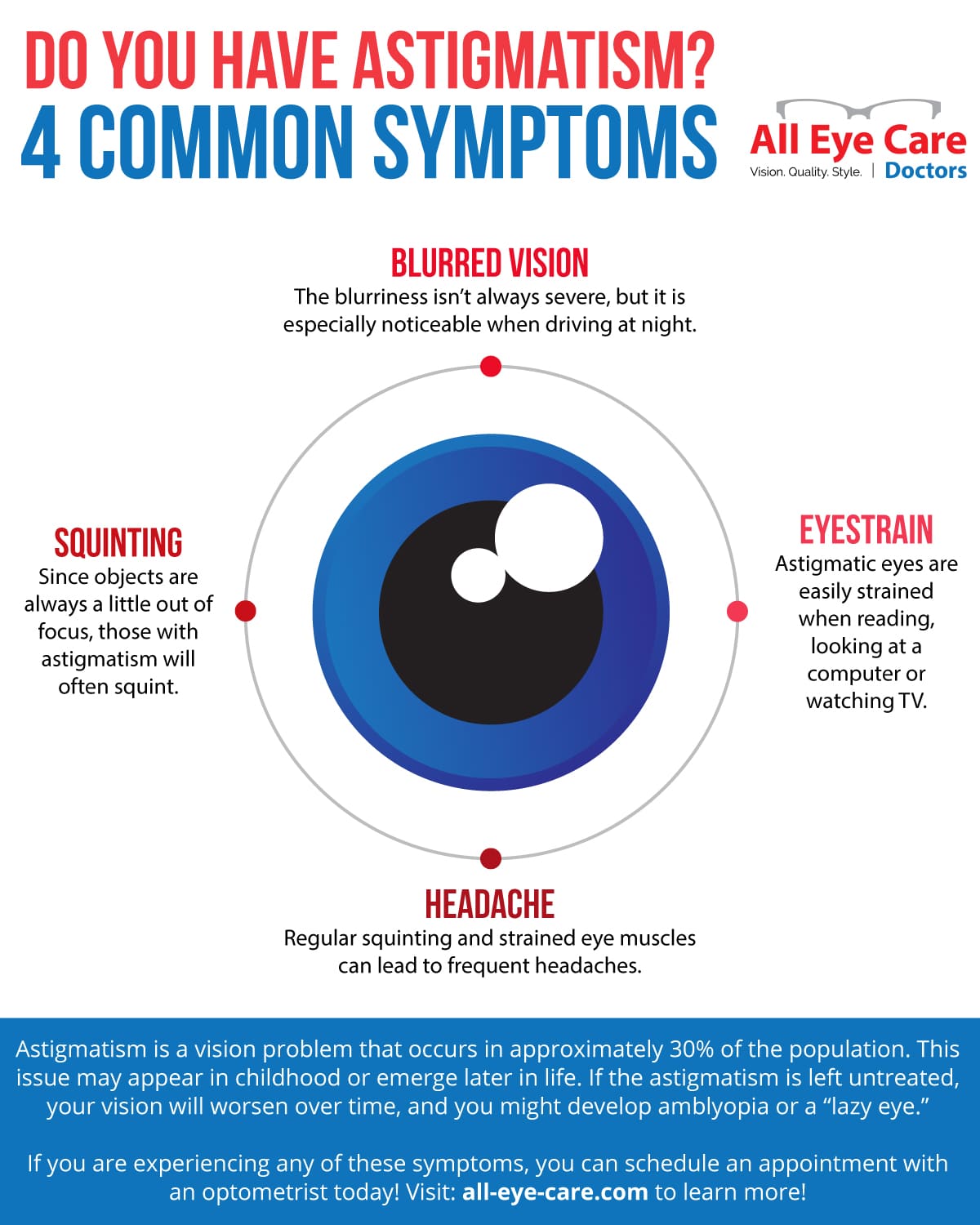
Individuals with astigmatism might scrunch up your eyes to try to enhance their blurry vision, which can lead to eye stress as well as migraines. It is essential to see a qualified eye care expert as soon as possible if you observe scrunching up your eyes or various other signs of astigmatism. Your eye doctor can recommend corrective glasses or get in touch with lenses to help you see plainly in any way ranges. Astigmatism is among the most common refractive mistakes that robs individuals of clear vision, together with nearsightedness (nearsightedness), hyperopia (farsightedness) and also presbyopia (aging blur). It impacts grownups and kids alike.
Myth 2: Astigmatism is a genetic condition
Astigmatism is a refractive error triggered when your cornea or lens have an uneven contour. This inequality creates light that enters your eye to be curved erratically, which can trigger fuzzy vision in any way distances. Most people that have actually astigmatism are born with it, yet some may get it from eye injuries, illness or surgical procedure. Eye care experts aren't sure why the form of one's cornea or lens varies from person to person, yet they do recognize that it is hereditary and can be given through generations.
There are 2 kinds of astigmatism: regular and irregular. check out this site suggests that your cornea - the clear front layer of the eye - isn't entirely round like a basketball, however it is a lot more extended, formed more like a football. This implies that the light entering your eye strikes the retina at greater than one factor, which brings about blurred or altered vision. The various other type of astigmatism is uneven astigmatism, which suggests that your cornea and/or lens are bent in more than one direction or steeper in the bottom than the top.
Myth 3: Astigmatism is permanent
The majority of astigmatism is genetic. But Learn Additional Here can also be brought on by eye injuries, surgery, aging, or scarring. It could even develop from the form of your cornea or lens. The major cause is when the major meridians of your eyes (the steepest and also flattest parts) are not vertical to each various other. This causes blurred vision because the retina can not concentrate clearly on the image.
It is essential to check out an ophthalmologist if you notice any modifications in your vision. Trigger sees can aid capture extra severe troubles, such as keratoconus. This problem triggers the cornea to slim and also end up being more conical. This makes it difficult to see as well as can impact depth perception. Rubbing your eyes can increase your risk for this disease, also. Dry eyes and allergies can also add to the problem. One of the most usual therapy for astigmatism includes rehabilitative lenses, which can consist of glasses or call lenses. Other alternatives include orthokeratology, which uses stiff get in touch with lenses to reshape the cornea, or laser surgery.
Myth 4: Astigmatism is painful
The eye is created to filter light into the retina and also concentrate it onto the back of the eye (the cornea or lens). When these frameworks are misshapen, nevertheless, vision can be blurry. This refractive error can be corrected with prescription eyeglasses as well as contact lenses or by having astigmatic keratotomy surgical procedure, which entails making small cuts on the steepest curves of the cornea.
The most common sign of astigmatism is blurred vision, which can make it illegible or see objects in the distance, also when you are sitting near them. You might likewise have difficulty judging ranges or seeing clearly in the evening, when you are more likely to experience glow and also halos around lights.
It is possible to create astigmatism at any kind of age or after an eye injury, however most people are born with this refractive error. Astigmatism can intensify as the eyes ages, which is why it is essential to have routine eye tests to identify and treat any adjustments in your vision.